Care is part of curiosity
Good discoveries.
Good habits.
Learn how to prepare your space, handle ingredients, use tools, and finish an experiment thoughtfully.
Practical guidance for U.S. home kitchens. Reading and practice support learning; they do not provide food-handler certification or replace local commercial requirements.
Eight habits to build on
Take care, step by step.
Food handling and physical hazards need different kinds of attention. Each lesson explains a practical next step.
Ready, set, clean
Prepare your hands, tools and workspace, then notice when a task calls for another wash.
Explore the habit ↗Habit 02 / Kitchen skillsKeep ingredients from sharing unwanted passengers
Follow the path from raw ingredients to hands, tools and food that is ready to eat.
Explore the habit ↗Habit 03 / HeatCheck with a thermometer
Match the food category to the right rule, then measure in the right place.
Explore the habit ↗Habit 04 / Kitchen skillsKeep cold food cold
Use actual appliance temperatures and a storage plan instead of guessing from a chilly feel.
Explore the habit ↗Habit 05 / HeatLeftovers with a plan
Decide how to cool, label, store and reheat food before the meal is over.
Explore the habit ↗Habit 06 / Kitchen skillsIngredients and allergens
Read the whole label, account for substitutions and keep food from sharing unintended ingredients.
Explore the habit ↗Habit 07 / HeatTools, heat, steam and appliances
Give every tool a place and every hot or sharp task a responsible adult.
Explore the habit ↗Habit 08 / Kitchen skillsExperiment wisely
Know what the samples are for, when to stop and how the investigation will end.
Explore the habit ↗Practice 01 / Notice & improve
Spot the kitchen risk.
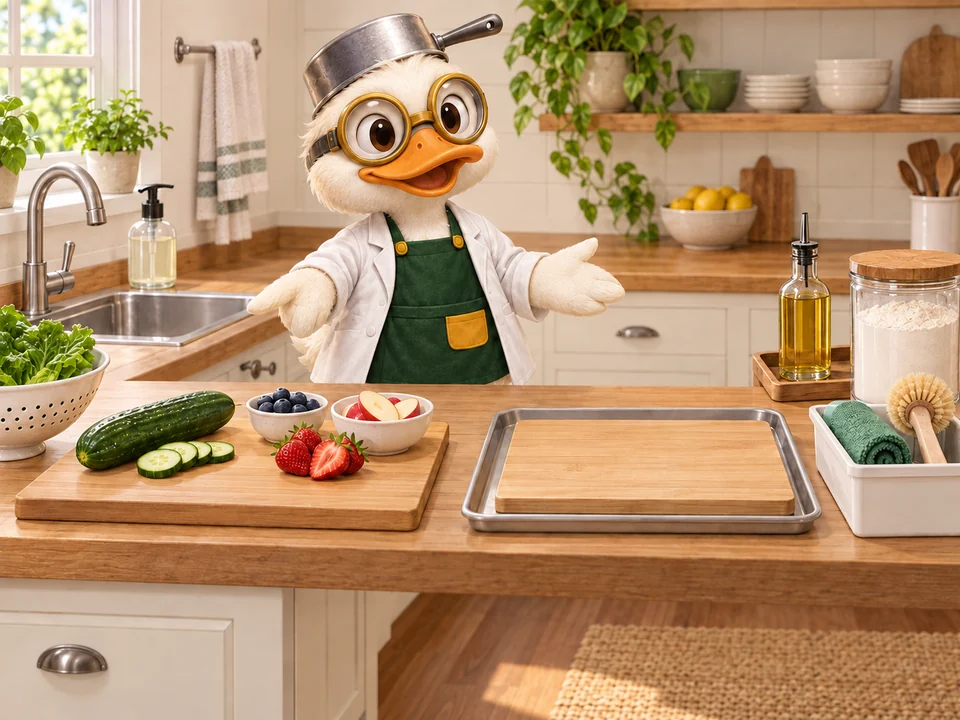
These are teaching situations. The numbered overlays describe imagined problems; the illustration is not a safety inspection. Use a marker or the matching list to explore a concern, then reveal the better habit.
Prepare separate work spaces
Imagine the situations described by the numbered markers. The picture provides an organized kitchen setting; the text describes the concern and the better habit. Explore all four before planning your own setup.
Illustration with instructional overlays · Readable guidance is the source of the lesson.
Build the improved setup.
0 of 4 improvements reviewed for this teaching scene.
- Use separate clean equipment for the salad and wash hands at the task change. An adult cleans and sanitizes equipment and surfaces contaminated by raw meat or its juices according to the product directions. Keep distinct labeled raw-food and ready-to-eat stations.
- Move used cleaning materials away from clean equipment. Clean the affected tools appropriately and provide a clean drying towel for hands. Keep used items in a separate cleanup area and clean tools stored apart.
- Keep raw flour contained and separate from ready-to-eat food. An adult handles cleanup, and everyone washes hands after the flour task. Do not taste raw flour or dough, and do not use raw dough as children’s play material. Keep the flour closed and away from the fruit station.
- Pause the activity, keep others clear and have the adult contain and clean the spill before continuing. Return the oil container to a stable tray away from the edge. Keep a clear dry route and contained work area.
Practice 02 / Choose & explain
What would you do next?
Explore one fixed situation at a time. There is no score to pass and all safety lessons stay available.
Situation 1 of 12
A handwash at the handoff
You washed your hands before setting up the texture activity. Then you emptied the waste bin. The plates and spoons are ready, and no dirt is visible on your hands.
What should happen before you handle the samples?
Source checked 2026-09-25 · CDC: Handwashing as a Healthy Habit in the Kitchen ↗
Set up my lab
A little preparation.
A clearer investigation.
Shake, separate, repeat — preparation checklist
Review the instructions and agree on the adult’s role before beginning. Checked boxes record that you reviewed these items; they do not certify the kitchen or make a sample safe to taste.
0 of 16 items reviewed.
Checkmarks last for this visit. Print a copy if you want to keep it.