02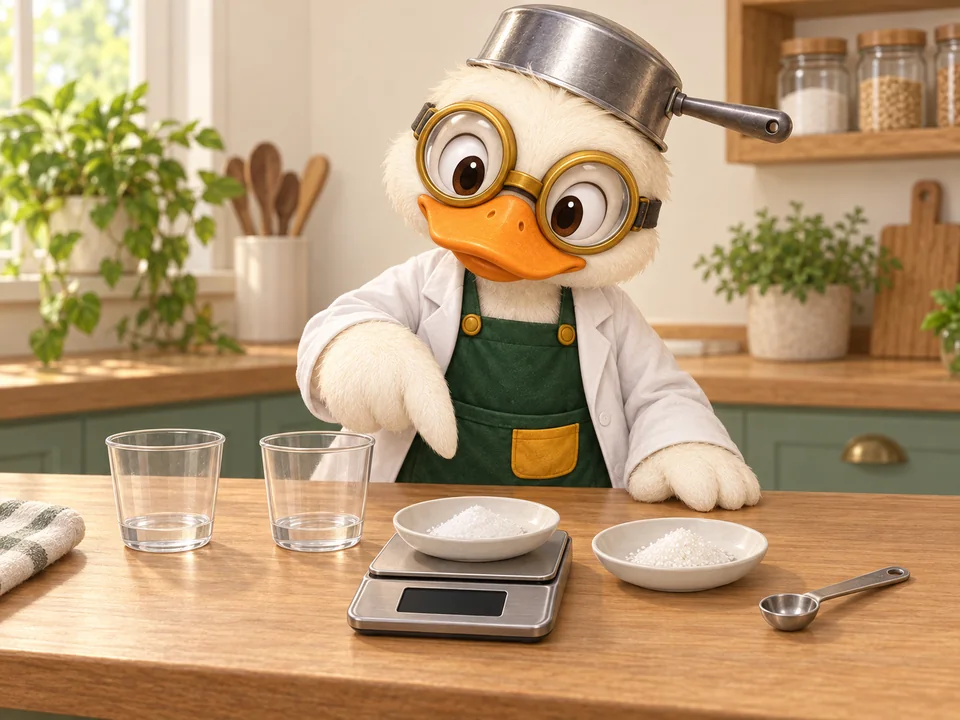 Ingredients
Ingredients10 min hands-on · A little practice
Where did the crystals go?
Do equal masses of salt and sugar dissolve equally in a little water?
Let’s investigateWelcome, curious cooks
Captions includedFull transcript & video details →
Join QuackPot and Spatch in a kitchen full of possibilities. Explore science, math, art, history, and culture through food. Build safe cooking habits, discover how food nourishes us, and make something delicious.
For curious cooks. Big, small, and everywhere in between.
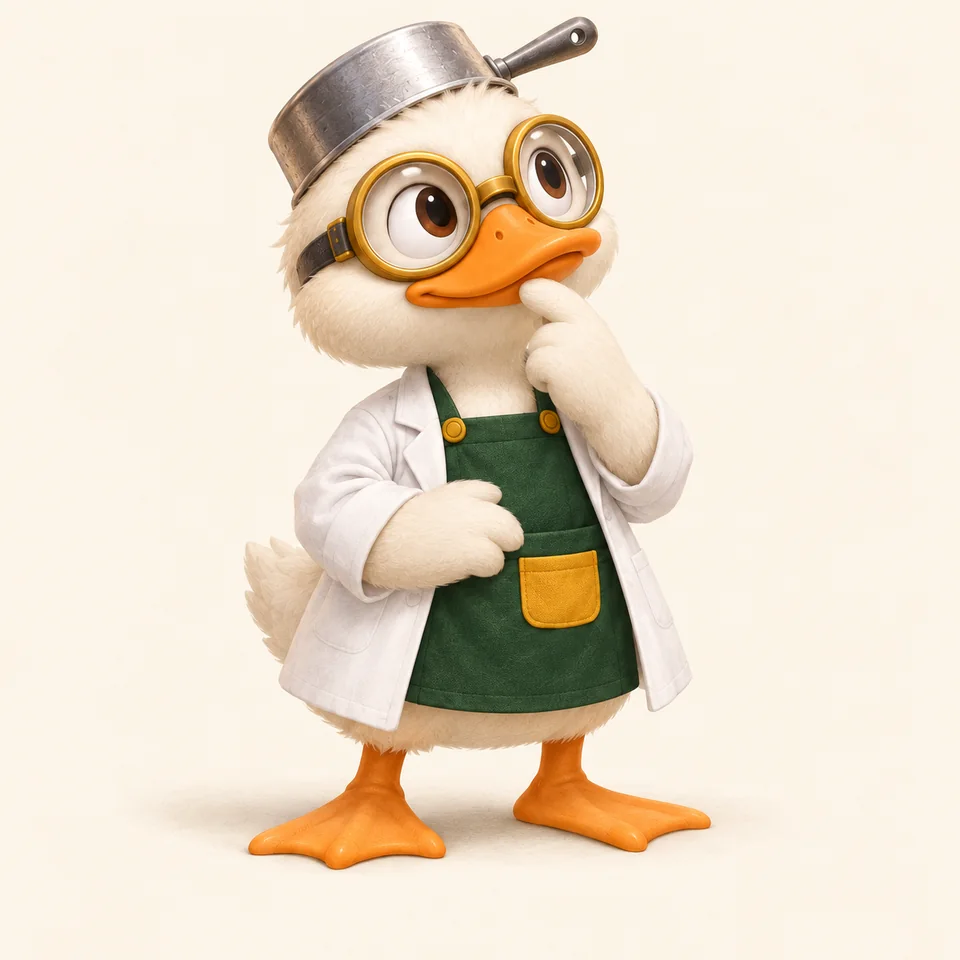
QuackPot wonders…
One jar gets a shake. Its matching jar stays still. What would you watch for next?
A 30-second thought experiment
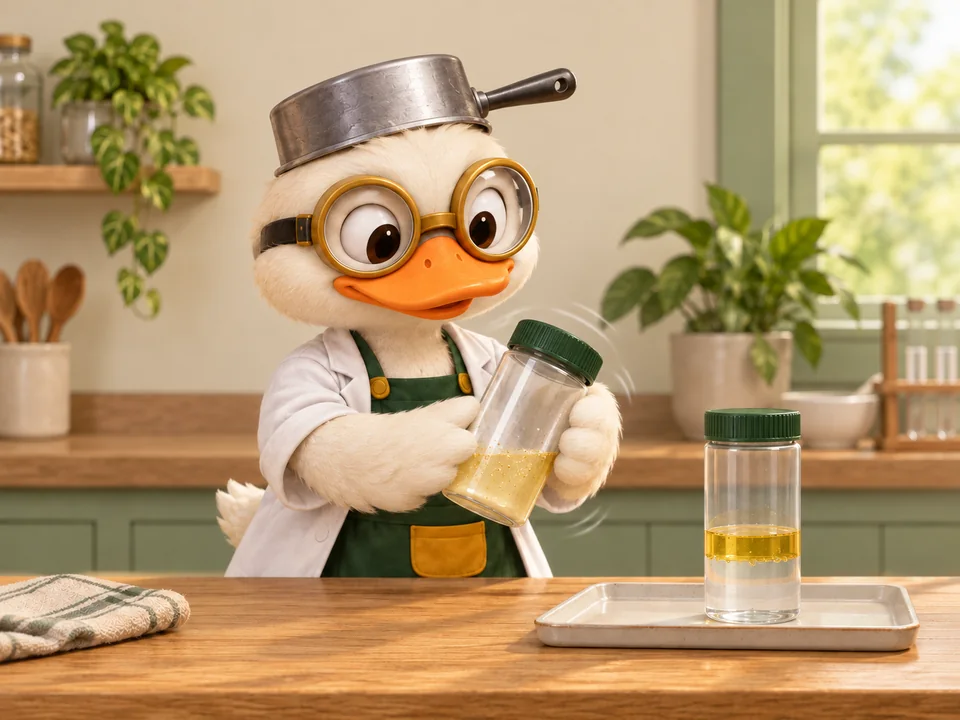
Oil. Water. One good shake.
What do you think happens next?
Experiment 01 / Ingredients + texture
On the lab bench
Give one jar a shake and leave its twin alone. Follow tiny droplets as a cloudy mixture changes back into layers.
You’ll discover: why mixing and dissolving are different, and how to make a fair comparison.
Gather: two lidded containers, water, cooking oil, a tablespoon measure and a timer. An adult checks the lids before shaking.
Shake, separate, repeat ↗A little change. A new question.
Imagine this cube is a sugar cube. When you split it into smaller pieces, what changes?
Illustrative model. This shows ideal cube geometry, not a prediction of a specific kitchen result.
Your starting surface.
One whole cube. Choose smaller pieces to compare.
These are ideal shapes, not kitchen measurements. All faces must be exposed for this comparison. Touching pieces hide some faces. Real food has irregular shapes; stirring, temperature and other conditions also matter.
Explore the concept with The Franklin Institute ↗Follow a different hunch
Ingredients10 min hands-on · A little practice
Do equal masses of salt and sugar dissolve equally in a little water?
Let’s investigate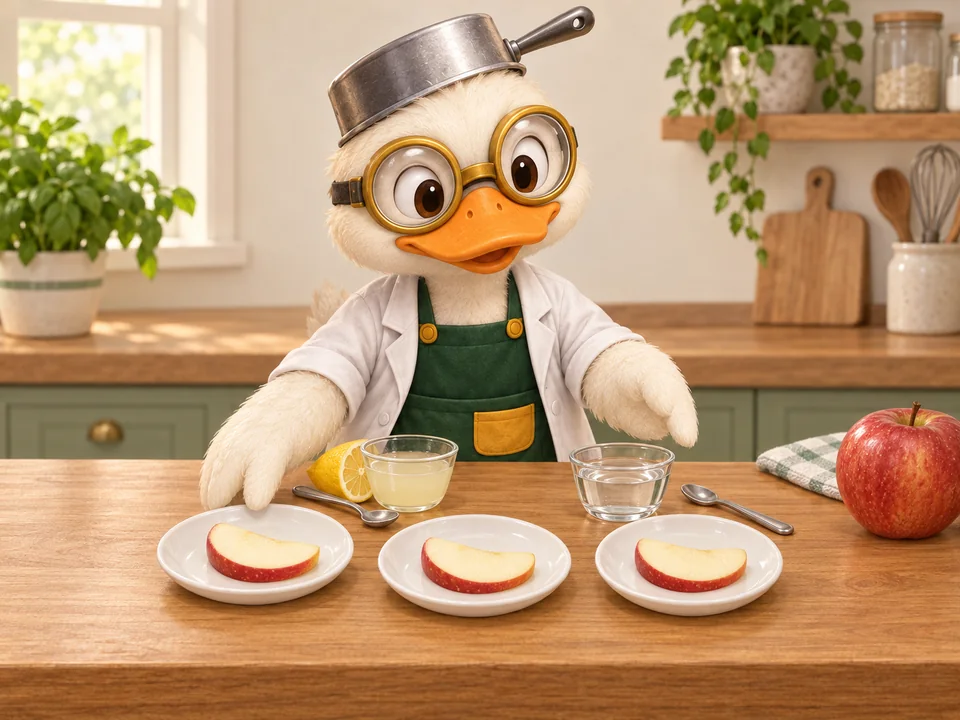 Ingredients
15 min hands-on · Easy
How do water and lemon juice affect the visible browning of apple slices?
Let’s investigate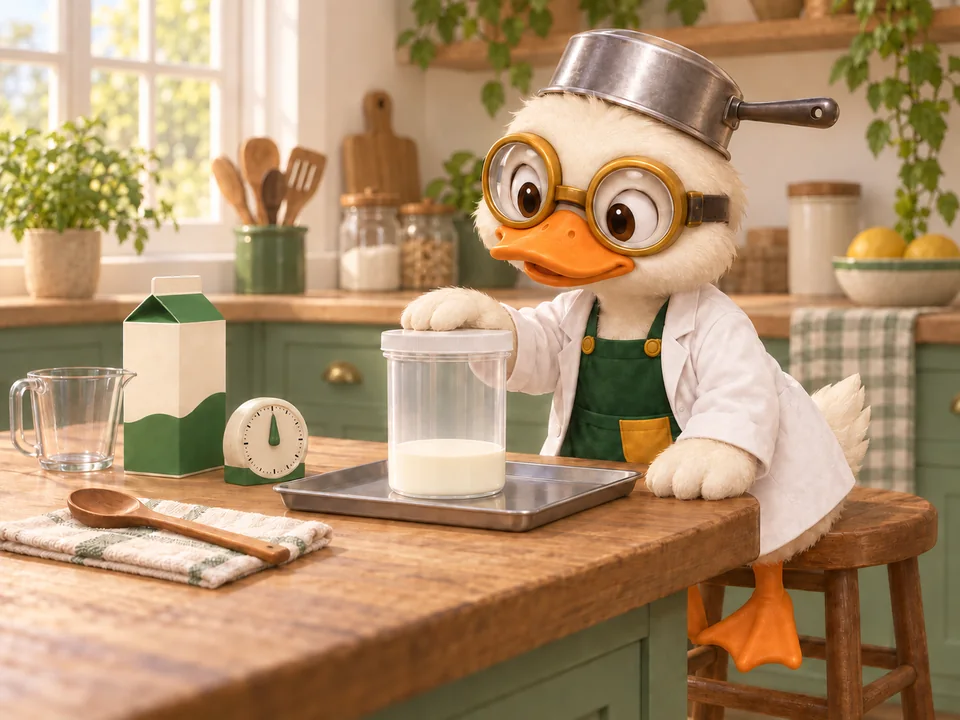 Texture
20 min hands-on · A little practice
What changes when you keep shaking cream?
Let’s investigateNew / Play & Practice
Scale a list, compare ingredients, plan a sequence, or find the word for what you notice.
More to notice. More to try.
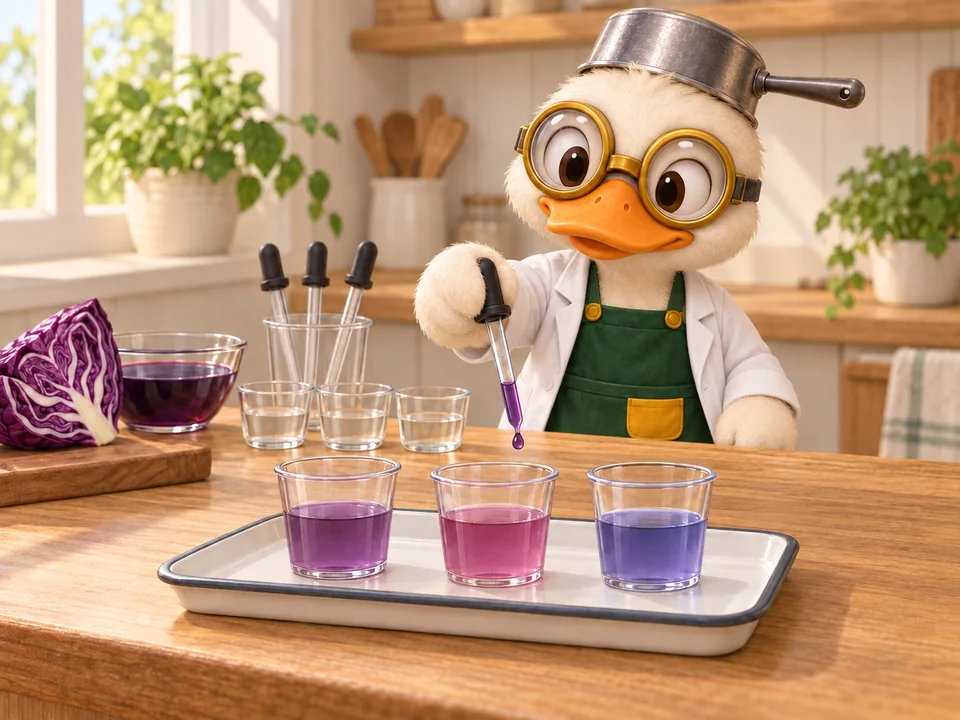
A new investigation
How does the same purple cabbage liquid respond to three food-based test liquids?
Take a closer look ↗A habit to try
A level spoon is useful, but equal volumes of different solids need not mean equal masses.
Take it into your kitchen →Did you wonder?
Sugar and salt both dissolve, but their particles separate differently.
Follow the food science →A good place to begin
Start small. Get curious. Build the confidence to ask your own questions.0 of 3 completed in your notebook
Observe
Start with your senses. Practice describing what you can actually observe.
The great texture detective →Predict
Turn a hunch into a question, then watch how a mixture changes.
Shake, separate, repeat →Investigate
Build a fair comparison and give your next question a proper test.
Change one thing →Put your discoveries to work
A project connects the questions, comparisons, and decisions into something that’s yours.
 01
016 stages · About 50 min total
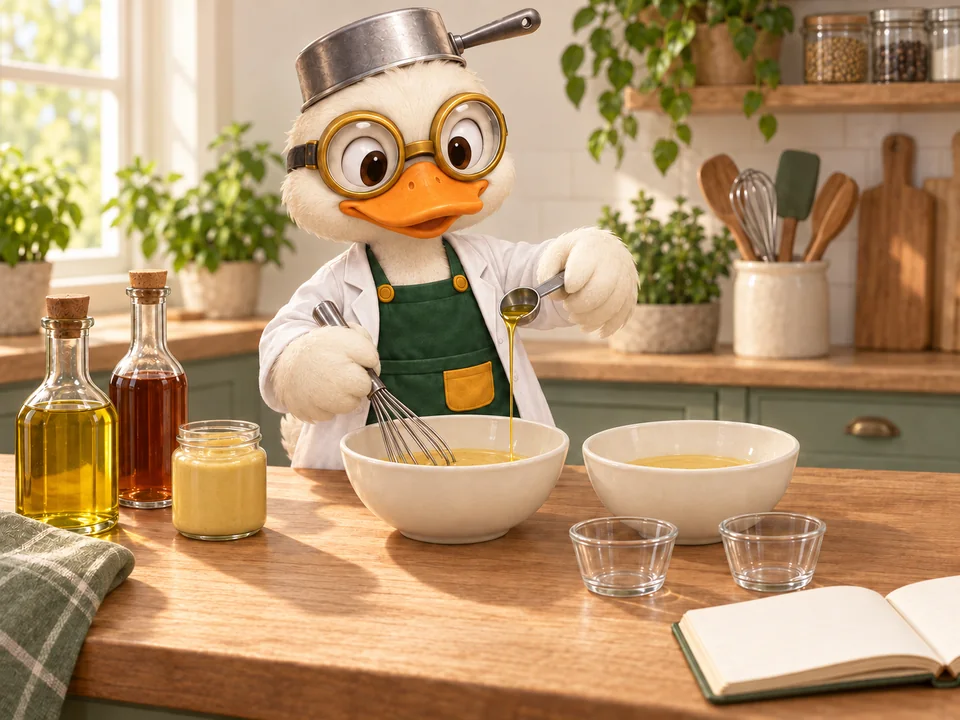
Investigate a small batch, compare two mixing methods and write a final formulation with evidence behind your choices.
 02
026 stages · About 60 min total
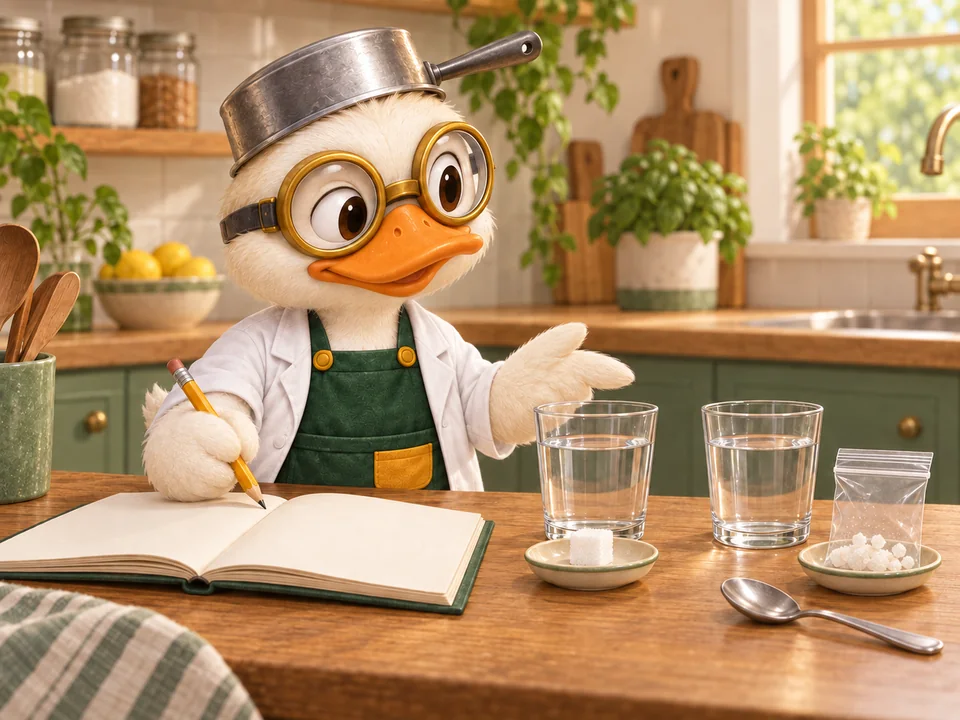
Choose a manageable question, build a fair test, collect real observations and create a short lab report that leaves room for uncertainty.
For the people who help curiosity grow
Give everyone a way to join in: predict, observe, describe or record. QuackPot brings the questions; the activity notes help you share the jobs, adapt the challenge and print a lab sheet for your table.
See an educator example ↗