Kitchen skill / Static illustrated guide
Read, plan, get ready
Turn a chosen recipe into a sequence you can explain, with the right tools, space and adult help ready. Planning practice does not approve an unreviewed recipe.
Step 1
Read through the finish
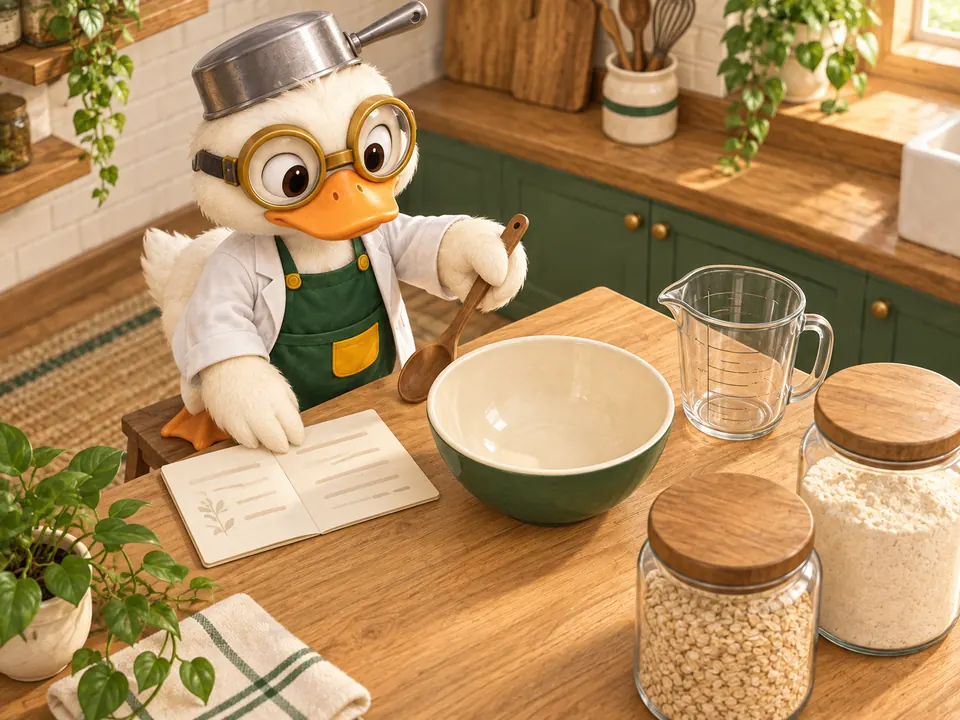
Follow the page through waiting and cleanup. Mark any instruction that needs explaining. Read the whole recipe, including cooling, chilling, serving and cleanup. Find its yield and distinguish hands-on work from waiting. Mark a word or instruction you cannot explain yet.
Step 2
Decode the ingredient line
“Divided” means used at more than one stage. Find both places before adding the ingredient. Notice preparation words such as chopped, softened, drained and divided. A divided ingredient is used at more than one stage; mark both places so you do not add it all at once.
Step 3
Make a usable space
Give reading, preparation and finished work their own space. Begin with clean hands and tools. Clear a stable surface and choose separate places for the recipe, ingredients, working bowl and finished work. Start with clean hands and equipment. Keep the reading area away from splashes.
Step 4
Stage what you need next
Stage the next job. Ingredients needing refrigeration stay cold until their step calls for them. Match each tool and ingredient to a step. Check measuring units and container size before beginning. Keep ingredients that require refrigeration cold until their step needs them.
Step 5
Say the sequence aloud
Say who does each job and what comes first. If the adult or equipment is missing, stop at the plan. Explain who does the first task, what must happen before the next one, where an adult takes over, and how the session finishes. If equipment or help is missing, stop at the plan.
If it feels tricky.
I found a preparation instruction halfway through.
Add that task to the beginning of your plan, then reread the sequence before starting.
The recipe makes more than we need.
Use Recipe Math for ingredient arithmetic, then ask whether the actual cooking method and equipment remain suitable. Never scale safety limits or cooking time automatically.
A small practice.
Choose a familiar, adult-approved recipe and make a paper plan without preparing food. Identify one waiting period, one label check, one adult task and one cleanup task. Record what you changed after reading through it twice.
Go deeper
A recipe contains dependencies as well as a list. “Cool before adding” links two tasks even when they are on different lines. A useful plan preserves those links and makes uncertain instructions visible. A Practiced note records your work; it is not a safety certificate.
Your practice, in your words
What did you try?
“Practiced” records your participation. It does not mean mastery, certification or safety approval.
Checking this browser…
Follow the sources.
- Penn State Extension: Re-Writing Recipes with Food Safety Directions ↗
- FoodSafety.gov: Four Steps to Food Safety ↗
Content version 1 · Sources checked 2026-09-25 · Published learning resource. Source review is not a physical kitchen trial.