seasoning / structure
Table salt ↗
Small crystals that season food and dissolve into water; their size matters when you measure by volume.
Learn / Ingredient Explorer
Look closely at familiar ingredients. Notice their roles, compare their behavior, and follow a question into the lab.
Explore the pantry ↓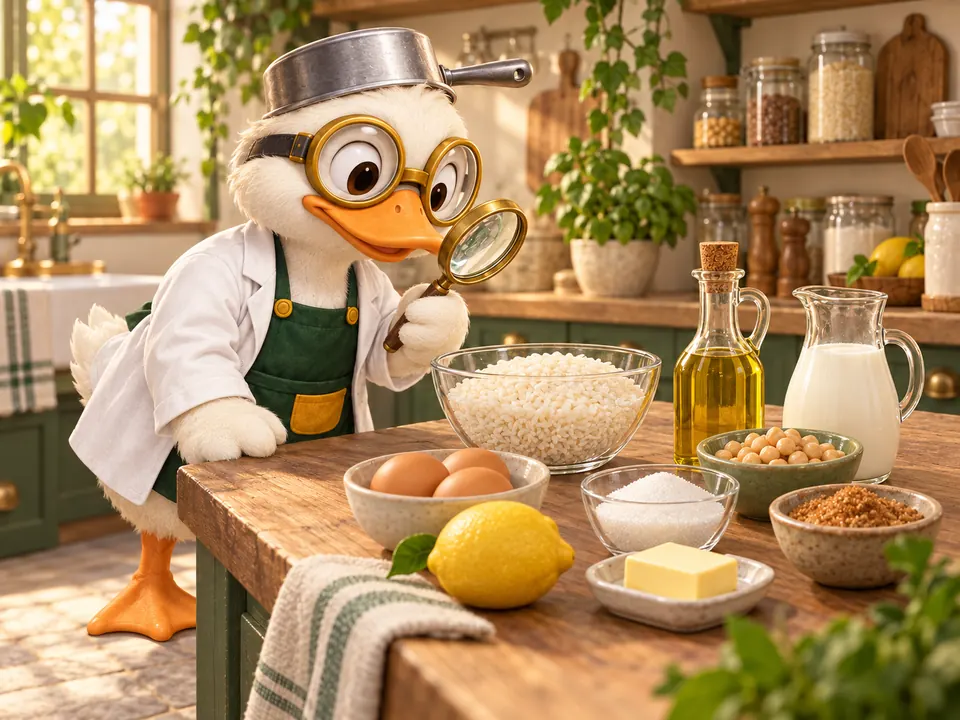
Meet the pantry
Roles depend on preparation. Compare two or three ingredients to see how their jobs overlap—and where the differences matter.
12 ingredients · 0 selected for comparison
seasoning / structure
Small crystals that season food and dissolve into water; their size matters when you measure by volume.
sweetness / structure
Crystalline sucrose adds sweetness, and its dissolved or crystalline state helps shape texture.
sweetness / aroma
Sucrose crystals with molasses bring sweetness, color and moisture-sensitive texture.
fat
A mild liquid fat that coats ingredients and can be dispersed into droplets in a dressing.
fat / structure
A dairy fat whose firmness and arrangement change with temperature and preparation.
liquid / fat / structure
A water-rich dairy mixture containing proteins, milk sugar and dispersed fat.
structure / aeration / fat
White and yolk have different compositions, giving eggs jobs in structure, foams and emulsions.
thickening / structure
A concentrated starch powder used to thicken water-containing foods when prepared and heated appropriately.
structure / thickening
Ground wheat brings starch and gluten-forming proteins, supporting both dough structure and thickening.
structure / thickening
A starch-rich grain whose variety, milling and cooking method influence the finished texture.
structure / thickening / liquid / aeration
Cooked seeds can become a substantial purée; their cooking liquid can help hold air or oil droplets.
acidity / liquid / aroma
The juice contributes acidity and liquid; the colored peel brings a different kind of flavor.
Select two or three ingredients above. Your selection stays with you when you change the role filter.
Ingredient roles / an illustrative model
Follow canned chickpea liquid through three conceptual states. This is an explanation, not a recipe generator.
Liquid phase
Canned chickpea liquid contains dissolved and dispersed substances released from chickpeas. Its composition varies by product and processing. Whole chickpeas and their liquid do different jobs.
Try the actual comparison →Mechanism source: University of Minnesota aquafaba research. Product variation and model simplifications apply.