Kitchen skill / Static illustrated guide
Measure what the recipe means
Measure an ingredient using the unit and preparation state actually requested. A mass reading and a filled cup answer different questions.
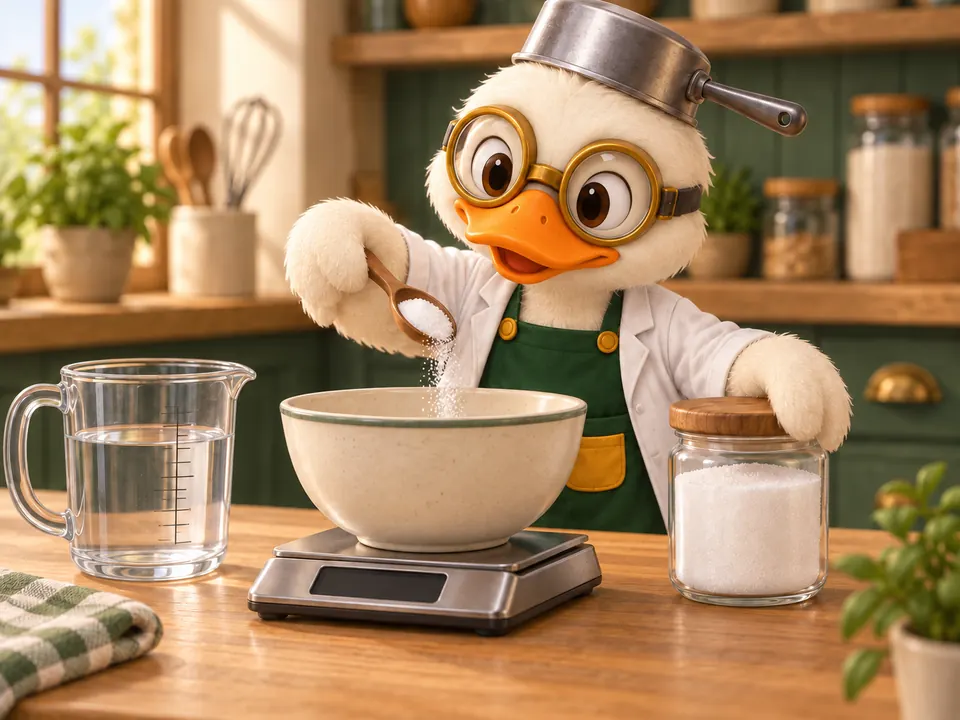
Step 1
Name the quantity and unit
Choose the named quantity, unit and tool. Mass and volume are not interchangeable. Read whether the recipe asks for grams, milliliters, a count or a named household measure. An ounce of mass and a fluid ounce of volume are different. Identify the measurement system.
Step 2
Set the scale up
Empty bowl first, then tare. Check the scale’s units and capacity before filling. Put the scale on a firm, level surface. Select grams, place the empty bowl on it and use tare to zero the display. Check the device instructions and its capacity.
Step 3
Add gradually and record
Add a little, pause and read. Record only the display you actually see, with its unit. Spoon the ingredient into the bowl, slowing as you approach the requested mass. Wait for a stable display. Record the displayed value and unit, not extra decimal places the scale cannot show.
Step 4
Read a liquid measure
Bend to the marked level; leave the jug on the table. Read the liquid surface as the vessel directs. Set the jug on a level surface. Add room-temperature water and look at the marked level from the side at eye height. Follow the vessel’s instructions for reading its liquid surface.
Step 5
Respect preparation words
Level as directed, then preserve the preparation word. Equal cup volumes need not have equal masses. For a dry-volume measure, follow the recipe’s filling and leveling method. Packed, sifted and chopped describe different states. A chart conversion applies to its named ingredient and preparation.
If it feels tricky.
The display includes the bowl.
Remove the ingredient into another clean container, replace the empty bowl and tare again.
I only have volume measures but the recipe gives grams.
Find the recipe author’s volume equivalent or use an ingredient-specific sourced conversion with its stated preparation. Do not invent a universal cups-to-grams factor.
A small practice.
On a clean tray, use the scale to measure a practice target of 20 g granulated sugar. Separately use the jug to measure 50 mL room-temperature water. Write how each tool works and what its smallest readable step is. These are measurement exercises, not a recipe; do not mix or taste the practice samples.
Go deeper
Mass concerns the amount of matter; volume concerns occupied space. Packing can change the air gaps in a cup without changing the ingredient itself. A scale also has limits: resolution, capacity, calibration and technique matter. A stable digit is not a promise of perfect accuracy.
Your practice, in your words
What did you try?
“Practiced” records your participation. It does not mean mastery, certification or safety approval.
Checking this browser…
Follow the sources.
- NIST: Metric Kitchen Culinary Measurement Tips ↗
- King Arthur Baking: A Digital Kitchen Scale ↗
- King Arthur Baking: Ingredient Weight Chart ↗
Content version 1 · Sources checked 2026-09-25 · Published learning resource. Source review is not a physical kitchen trial.