Texture / Ingredients / Kitchen skills
The great texture detective
How much can you discover about a food’s texture without tasting it?
Look, gently press, bend and listen. Build a small texture vocabulary from evidence you can see and feel with a spoon.
Proposed procedure; kitchen trial pending. Explore with an adult and follow the preparation and handling notes.
- Hands-on time
- 10 min
- Total time
- About 10 min
- Difficulty
- Easy
- Participation
- Adult setup
Before you investigate
A thoughtful setup.
Use sight, sound and a spoon or adult demonstration. Do not eat the pressed, broken or handled samples, and keep separate snacks outside the investigation area.
The adult’s part
- An adult selects suitable samples, checks ingredient labels and makes any cuts before the learner begins.
- The adult may demonstrate pressing or breaking and selects alternatives when direct handling is unsuitable.
Tools & heat
- Use a clean spoon for each sample and break pieces only over a plate. Adult-only knife work happens during preparation.
- Optional clear bags support observation; they are not an assurance against allergen exposure.
Ingredients & allergens
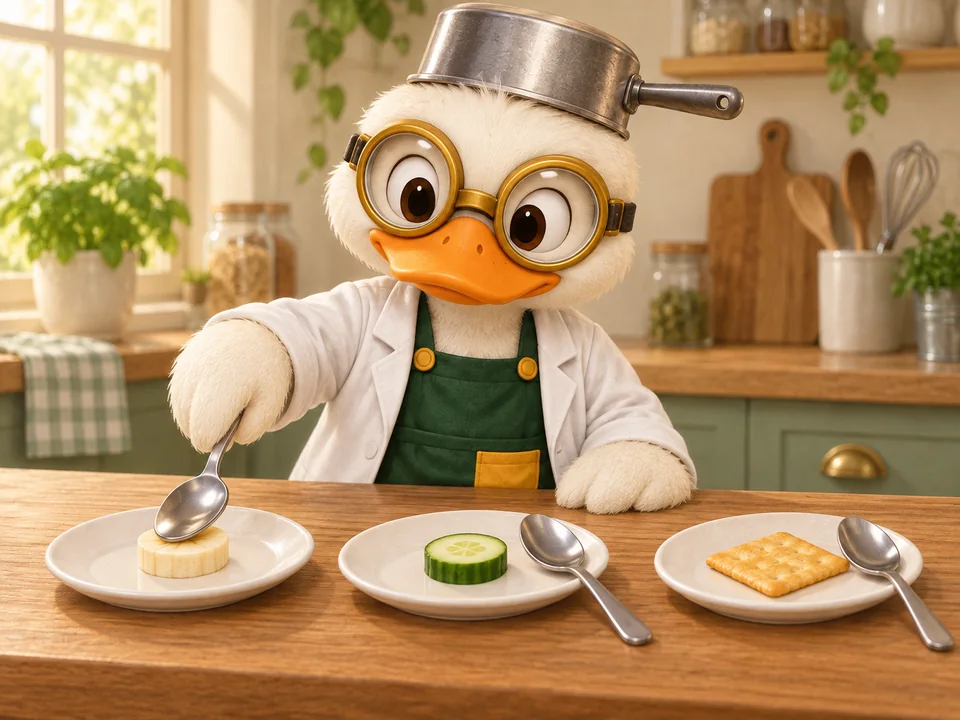
- The suggested samples are banana, cucumber and a plain cracker. Rinse produce before cutting and keep the original cracker label available.
- Avoid hard, round or small samples that young participants may mistake for snacks. The activity uses observation, not a mouth-feel test.
- Crackers commonly contain wheat and may contain milk, soy, sesame or other ingredients; inspect the actual label rather than assuming a formula.
- Other foods can cause allergies too. Do not use an ingredient a participant must avoid touching; provide an appropriate observation route or a different activity.
Prepare your space
- Arrange labeled plates on a stable clear surface with one spoon for each.
- Wash hands and equipment before starting; keep small broken pieces contained.
Build the relevant habits
Review or print my preparation checklist
Checking this browser…
Discover
What you’ll learn.
- Describe a food using several kinds of observation.
- Separate a visible or audible observation from a personal preference.
- Notice that different tests reveal different features of texture.
Change: The sample being observed; this is a descriptive comparison, not a test of one isolated ingredient property.
Keep the same: The order of observation methods · The same type of spoon · Similar gentle actions and observation conditions
My prediction
Try it
Follow your question.
Look before touching
Describe each surface. Is it even, bumpy, shiny, dull, full of holes or visibly moist? Record only what you can observe, rather than whether you like the food.
Care at this step: The adult confirms the chosen foods and labels before the plates are set out.
Try a gentle press
Use the back of a clean spoon to press each sample gently. Notice whether it dents, spreads, resists or breaks. Use a separate spoon for each food and stop before pieces scatter.
Care at this step: Press gently with each food’s own spoon; stop before pieces scatter.
Watch a bend or break
If appropriate, ask an adult to bend or break a small piece over its plate. Listen and look: does it flex, tear, snap or crumble? Skip this action for foods or participants where it is unsuitable.
Care at this step: Only the adult performs a suitable bend or break. Skip it if the sample or learner’s needs make it unsuitable.
Build a description
Choose two or three words for each food and attach evidence: “crumbly because small pieces broke off under the spoon.” A word may fit one sample and not another.
Compare methods
Return to your first prediction. Name one thing the press, bend or sound revealed that you could not confidently tell by looking alone. “I could not tell” is a useful observation too.
Care at this step: A texture description does not establish that a sample is safe to eat.
Observe
Look a little closer.
- What can you see on the surface?
- What happens under gentle spoon pressure?
- What sound, if any, accompanies a break?
- Which description includes evidence rather than a judgment like good or bad?
Different results are useful. Record what you see, rather than trying to match an expected answer.
My observations
Understand
What’s going on?
Texture includes several features: a surface can feel rough while the food underneath is soft, or a smooth piece can resist bending. Different actions reveal different features. You can make useful texture observations without tasting, and two observers may choose different words for the same experience.
Use this in your kitchen
Recipes ask for changes such as softened vegetables, crumbly pastry or stiff peaks. Practicing precise descriptions helps you notice these endpoints and explain what you mean.
Go deeper
A spoon press is a qualitative comparison, not an instrument measuring hardness. Force, sample thickness, moisture, temperature and the direction of a bend all influence the result. Mouthfeel is another form of sensory information, but it is not identical to what fingers, a spoon or eyes detect. Avoid assuming that a food will feel exactly the same in the mouth as it does under a spoon.
Why results may differ
- Different food sizes and shapes make mechanical comparisons uneven.
- Gentle pressure is not a standardized force.
- Freshness, moisture and temperature affect texture.
- A description of one sample is not a universal property of every food with that name.
Try again
One discovery.
Another question.
Compare two pieces of the same food prepared differently, such as an intact banana slice and a mashed portion of equal starting size. Change only the preparation method and describe what each observation action reveals.
My conclusion and next question
Finish thoughtfully
Clean up
- Collect crumbs and broken pieces, wash plates and spoons, clean the surface and wash hands.
Dispose of the samples
- Discard handled samples. Compost appropriate plant pieces only under local guidance; keep other waste away from children and pets.
For parents & educators
Learning objectives
- Build descriptive vocabulary from evidence.
- Offer a complete investigation without requiring tasting or direct touch.
Prepare & make space
Select accessible foods, check ingredients and allergies, and pre-cut samples. Prepare photographs or an adult demonstration as another participation option.
The adult’s part
Manage knives, food selection and cleanup. Respect a participant’s choice to skip a sensory action.
Talk about it
- Can a food be both smooth and firm?
- Which action helped you choose that word?
- How is “I like it” different from “it bends”?
A simple way to join in
Match samples to word cards, point to a feature or dictate an observation while an adult performs the action.
Take it further
Write definitions for three descriptors that another observer could apply. Compare whether the group uses those definitions consistently.
Explore as a group
Use individual samples or an adult demonstration, with separate utensils. Compare descriptions without ranking learners’ preferences.
Clean up
Discard handled observation samples, wash utensils and plates, and clean the surface and hands.
Behind the explanation
- Nebraska Extension: Increasing Sensory Awareness Through Food ↗
Food can be described through sight, touch and sound as well as smell and taste. Useful texture descriptions include smooth, bumpy, soft and hard.
- FDA: Selecting and Serving Produce Safely ↗
Wash hands and equipment, rinse produce under running water before cutting, and keep it separate from raw animal foods. Do not wash produce with soap.
Activity exp-texture · Content version 2 · Sources checked 2026-09-25 · Proposed procedure; kitchen trial pending
Where will your curiosity go next?
 Ingredients
10 min hands-on · Easy
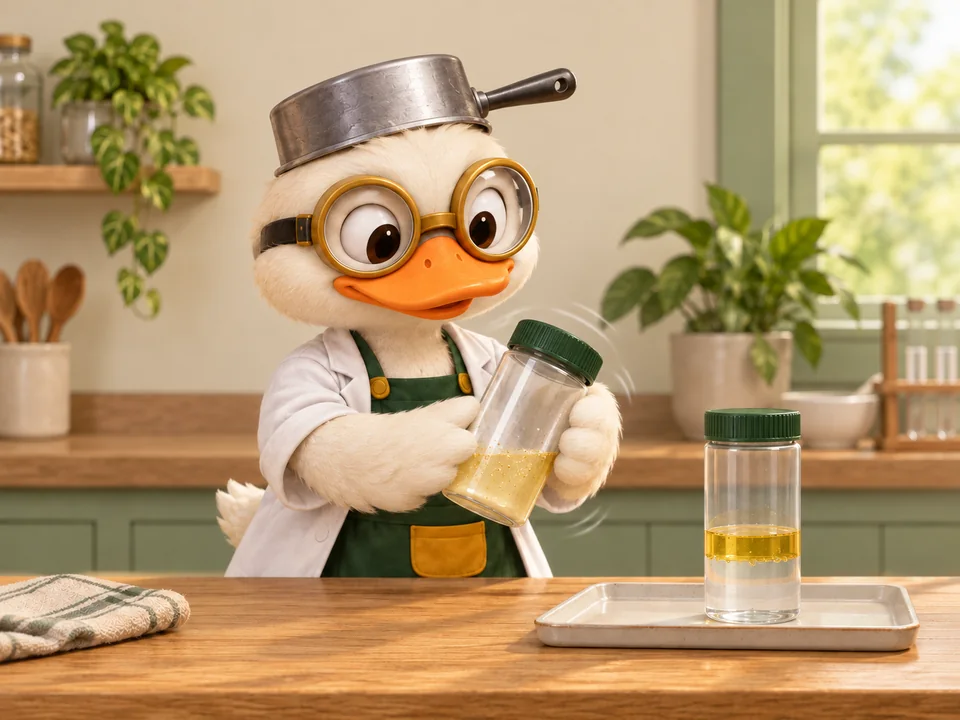
Shake, separate, repeat
Can a good shake make oil and water stay together?
Let’s investigate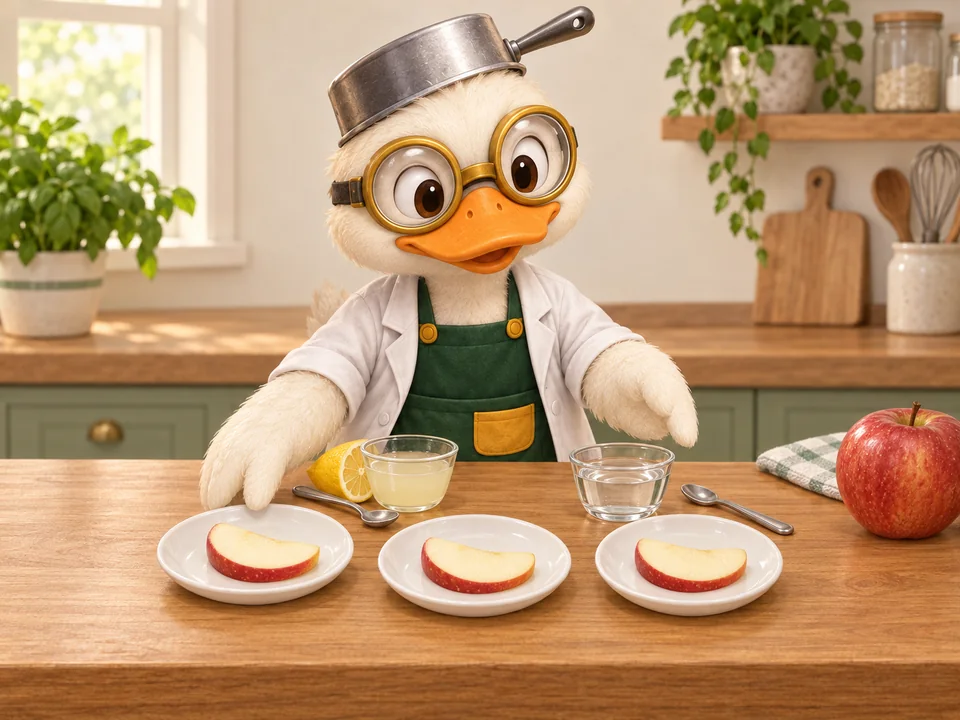 Ingredients
15 min hands-on · Easy
The apple investigation
How do water and lemon juice affect the visible browning of apple slices?
Let’s investigate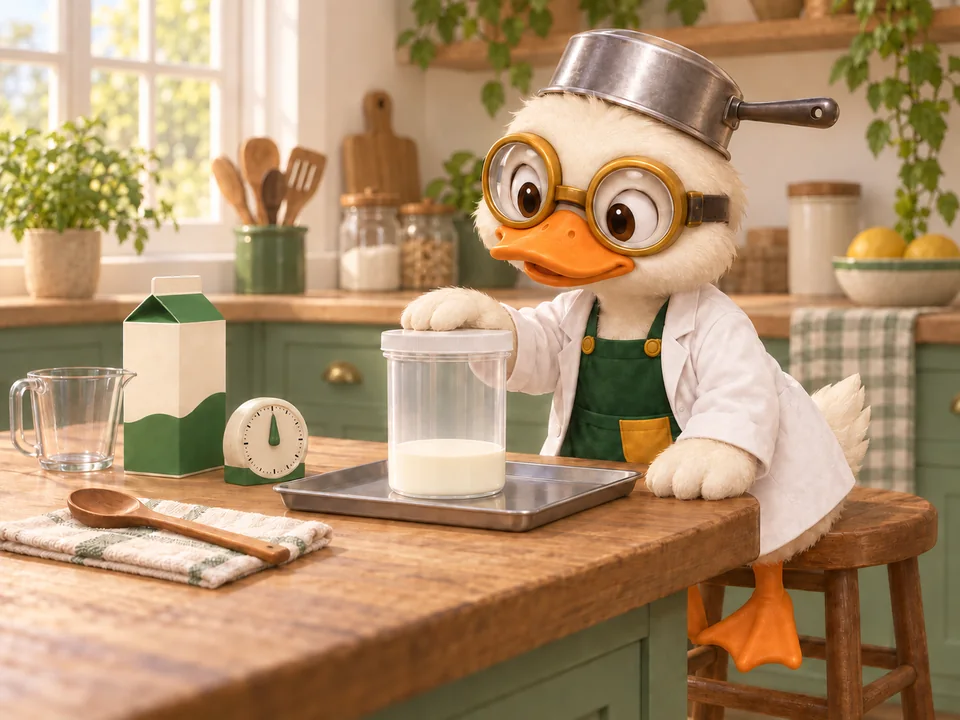 Texture
20 min hands-on · A little practice
From cream to something new
What changes when you keep shaking cream?
Let’s investigate